
Joel Hoekstra talks all about the latest Joel Hoekstra's 13 album From The Fade
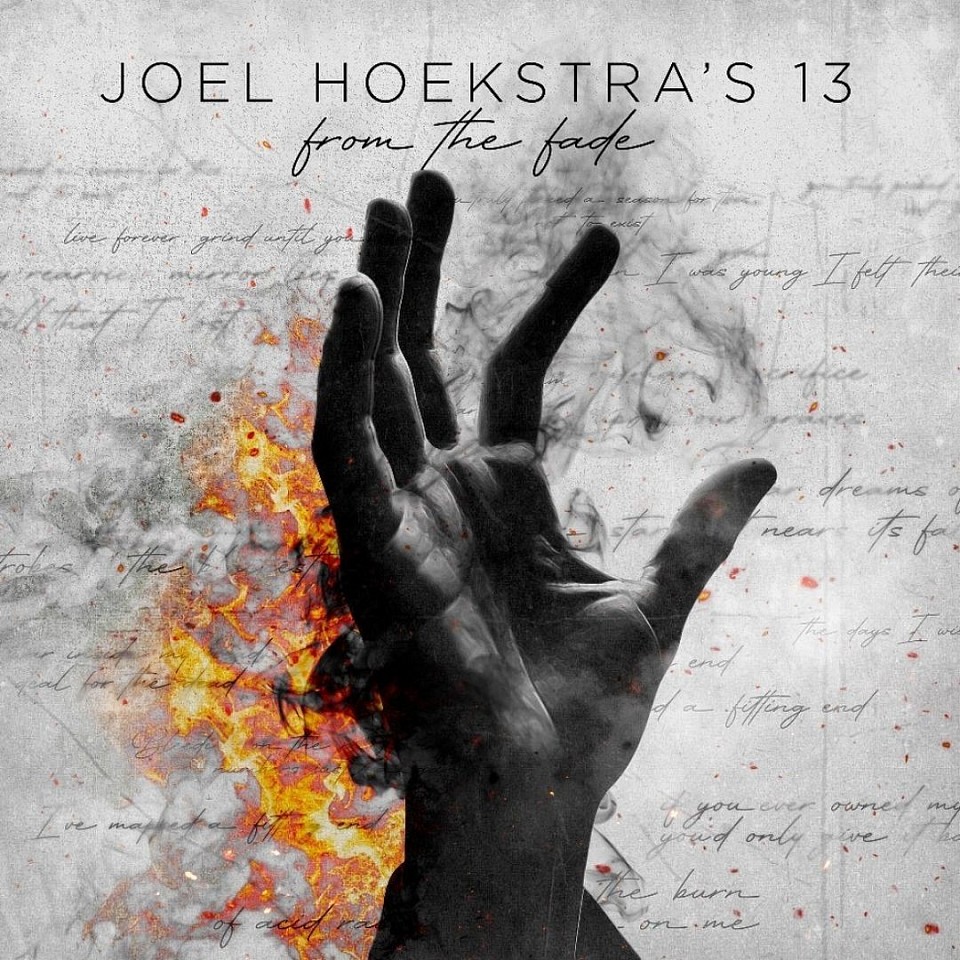
Joel Hoekstra's 13: Unveiling "From The Fade" Album
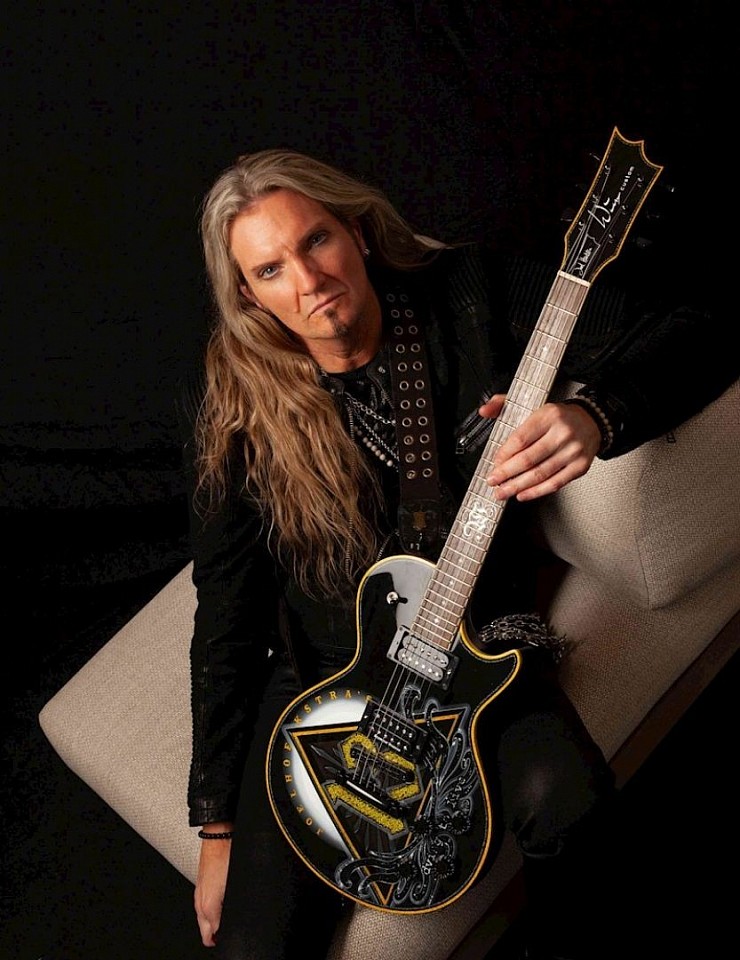
Photo credit: Mike Polito
With From The Fade, Joel Hoekstra returns at the helm of Joel Hoekstra’s 13 with a dynamic fourth studio album that blends soaring melodies, thunderous riffs and the high-level musicianship fans have come to expect. Across ten brand-new tracks (and 1 bonus track), Hoekstra once again proves why he remains one of rock’s most respected guitarists and composers, crafting songs that honour the traditions of classic hard rock while pushing confidently into modern melodic metal territory. Joining him is an elite cast of seasoned players: powerhouse drummer Vinny Appice, legendary bassist Tony Franklin, virtuoso keyboardist Derek Sherinian and rising vocal sensation Girish Pradhan. The result is an album characterised by tight arrangements, technical precision and emotionally charged performances that feel both grand in scale and deeply personal in execution. More than just a studio project, From The Fade stands as a statement of intent — a powerful reminder of what can happen when world-class collaborators unite behind Joel’s creative vision. We catch up with Joel as he acclimatises to home life in New York following another massively successful run with the Trans-Siberian Orchestra. In between getting some work done on his gold top Les Paul and prepping for some video recording for Guitar World, Joel very kindly takes the time to chat to Rock Today about From The Fade. We take a seat and out conversation begins...
It’s a hugely exciting time with the new album From The Fade due to be released on 27th February. With around 6 weeks ago, what sort of thoughts are going through your mind album release time?
Not much to be honest! It’s kind of one of those situations where you make it more of an artistic outlet, not so much as any type of moneymaking business model type of thing. It’s much different to the other things I do in that regard, and it’s just meant to be part of my bigger picture, I guess. We use the word legacy sometimes and it sounds self-important but at the end of my career I would like to be about more than just a guy who has some cool gigs. I’d like to have my own music out there. Obviously earlier on I did the primarily instrumental albums and then when I became more well-known in the hard rock scene, people were listening to my solo stuff and going ‘Dude, your next record should be a rock solo album!’, hence Joel Hoekstra’s 13. I didn’t have a lot of interest in making a traditional shred record with extended gratuitous guitar solos. I had more interest in the writing and trying to give people songs in the vein of what really inspired me to play guitar. I mean, this is ultimately the style of music that got me interested in playing in the first place and obviously the way my career worked out, I ended up dabbling in a million other things, but what worked out for me is what got me interested in playing. So I’m just trying to pay homage to that stylistically with the writing and the playing and I think about it from the standpoint of a listener. I know as a listener I’m not necessarily interested in hearing a minute and a half long guitar solo so for me these albums are more about the songs and being able to write not just riffs but the vocal melodies and the lyrics, to oversee the artwork and oversee the mixes. It’s about having my moment, not that there’s anything wrong with the democratic process of being in a band, but just to be the boss for a second.
That makes absolute sense and I love the way that you’ve positioned it as something personal because I think one of the things I was delighted to see with From The Fade is that it brings together the same cast of elite musicians that convened to record the previous Joel Hoekstra’s 13 album Crash of Life. From a band personnel perspective I would just like to learn a little bit more about how you decided who you worked with on this album. Do you see Girish Pradhan, Vinny Appice, Tony Franklin, Derek Sherinian and Jeff Pilson as standing/established members of the band or is the approach to band personnel something that needs to be much more open and fluid than this?
Looking at it from the standpoint of it being kept primarily in the recording domain it’s probably more aptly described as a project for now. So I feel like consistency with the members helps people identify with it, and me identify with it – I really learned to know everybody’s work. All the way from the beginning, Tony Franklin was the first person because we’d just finished doing a more ‘out there’ instrumental project called VHF and we liked jamming together. I said ‘Look, I’m thinking of putting together a rock album, would you want to do something like that but it’s going to be more straight ahead rock?’ and he said he was up for it. I also asked him who he wanted to work with as a drummer and he recommended Vinny Appice. I grew up on his playing but I’d never met Vinny. So we ended up rolling with that and then at that time, Russell Allen who sang on the first two records, Dying To Live and Running Games, was joining Trans-Siberian Orchestra which I’ve been a part of since 2010 all the way to date, and I’ve just finished a tour with them as a matter of fact. Having Russ sing on the first two records was great and then I just happened to think ‘I bet Jeff Scott Soto would sing backing vocals for me‘ when I was making the first one and how wouldn’t that be amazing: rather than me labouring and making it okay with backing vocals but to have Jeff who’s amazing at that stuff. So we came in and did that as a favour to me. However, Russell’s schedule was such that Jeff ended up singing lead on half of a Dying To Live. For the second record Russell was committed full time to sing lead on all of it but it took forever. It took like a very long time, I’d say over a year and a half before it was completed. So when it came time to make a Crash of Life, I just wasn’t prepared to have that kind of wait again, having multiple birthdays making an album of my own. So the label Frontiers, who have been amazing with this I might add - they were literally telling me just to record whatever I wanted with this record and were just so wonderful about it so a big thank you to them for giving me that artistic freedom– they recommended Girish Pradan who I wasn’t familiar with at the time but I checked out his band Girish And The Chronicles, and he's a little bit more of like a metal screamer and my initial model for what I wanted as a singer was kind of ‘Ronnie James Dio meets Lou Gramm meets Paul Rodgers‘. Girish and I talked about all that when it came time to do Crash of Life and I think he really delivered some incredible vocal performances on that record, which was written melody-wise and range-wise based on what could have been either Russ or Girish. I wasn’t quite certain at the time, but with this one, From The Fade, I kind of wrote in a little bit more of Girish’s metal side. He came into, I suppose, the thinking of the sound of the album as well but I think a big factor also is that I was playing with Accept at the time and I was just playing a lot more, metal style riffs. So when it came time to sit down and write the guitars for this, I was just in that mode and I figured that it was fine to have a heavier sound as long as we don’t lose the sense of melody which is important to me. I’m a melodic guy too big time so I just wanted to continue that vein. But yeah, it’s going to be a heavier record than the other ones. Derek Sherinian is just a no brainer. He’s a go-to guy when it comes to having a foil in terms of soloing. I think it’s kind of nice to have him with keyboard solos on this so it’s not just like there’s jus very, very long guitar solos but to a split up the breaks with him and I doing a trade. He’s just got a great sound and he works in a very professional, timely fashion.
Well that’s just pick up a little bit more on the vocal side of things because you’ve just mentioned Girish there. Girish is just the most powerful and gifted vocalist and it’s absolutely staggering what he brings to this album, but as you just shared, he’s not the only vocalist. Jeff Scott Soto, does of course provide backing vocals but there’s nothing ‘secondary’ here because the impact of Jeff’s vocals is so huge, so much so that it would be completely wrong for anyone to assume that Jeff has had a minor role to play in the making of this album. Collectively the vocals between Girish and Jeff are very special. That vocal partnership was of course a part of the previous Crash of Life record. How important was it for you to continue that vocal magic on this album?
Jeff is such a pro that I knew he would match whoever sang lead on it so that was never a concern. Girish was definitely a ‘feeling out process’ with Crash of Life where we took a track-by-track approach to see how things would go and we’d talk about it. But ultimately I was really elated with what he delivered in terms of his vocal performances on that record. They are dynamite! And it’s the same with this one because what I did was obviously write in a little bit more of a screaming way for him and to give him the opportunity to sound a little bit more metal in himself. I just thought that as long as we didn’t lose the hooky-ness and the melodic-ness of this, I didn’t mind it having some screaming and for it to be a little bit more aggressive. So I feel like in general that that is the sound of this. But Jeff is never a concern because he’s just a top pro all the way across the board which is why he has really risen to where he is in the business – he’s just very professional about everything he does.
It’s interesting to hear that you wanted to be the boss but it seems like you’re still allowing the band members the opportunity to bring their creativity though still firmly led by your vision. Is that a fair thing to say?
Yeah, that’s pretty much my production style. Insofaras the way this is put together, I am a dictator with the writing and then I’m the polar opposite when it comes to the production style. I just tell them to play whatever they want. Almost 98% of the time I keep exactly what they give me. I’ve been in many sessions in my life and I’ve been in their shoes so many times that I know that’s where I deliver my best, and then they enjoy doing it too because they get to put their stamp on it a bit and not feel like some guy has told them what to play note for note, which is definitely not the case. I’ll let them play whatever the hell they want over what I’ve written. Girish probably gets it the worst because I will admit that I will fall in love a little bit with some of the more melodic ideas that I’ll have for the vocals to do. About the time he’s getting it I’ve written the vocals on guitar and then I’ve written the lyrics and then I’ve sung it. So I’ve usually sang the entire album as a guide track for Girish by the time he gets it. So I guess I’ve just got a little bit more of something in my head as far as what I’m hearing vocally and he gets it a little worse! But for the other guys they give me pretty much exactly what I’m looking for.
I just want to pick up on how you mentioned earlier that this isn’t a typical shred type of album. You are of course known for being a hugely technically gifted guitarist but one of the wonderful things about Joel Hoekstra’s 13, that continues to be evident in the latest album, is that whilst there’s lots of highly skilled guitar wizardry in the music this doesn’t feel like an album created for other guitarists. First and foremost this is about incredible songs. To what extent would you agree with that and was it actually part of your vision to have something which isn’t all about putting the guitars front and centre and to perhaps have a broader appeal?
It’s more or less what I’m interested in listening to in that style. It’s more what I grew up listening to and especially my early influences. I’ve made instrumental albums already – I’ve done three of them – so for me when you’re part of bands, you’re not necessarily given free rein to write complete tracks. You’re able to contribute but then the way it works is that you’re not necessarily going to be the loudest voice in the room, especially if you’re one of the newer or less important members so to speak. So it kind of gives you the opportunity to see where you’d be if you’re able to push all your ideas through. Now that doesn’t mean I don’t like writing with other people, I do – that’s where you grow and where you learn - but it’s also where you sometimes find out that you hold too tightly onto your own ideas. There are times where you feel like you’re fighting for something you would die for and then a year down the road when it’s been released you can’t even remember what your idea was! So it’s funny how that works. It’s like there’s a lot of times you can get really caught up in the moment and think that it’s life or death. I do really enjoy working with others and playing music with others with all types of different degrees of involvement. That changes by record, whether or not I’m just going to be contributing a guest solo to somebody’s album all the way to something like this where everything has my name on it. I’m interested in it because I think it’s all valuable experience.
I think another quality of From The Fade album is that, to my ear, it appears to be a little heavier than previous Joel Hoekstra’s 13 albums, and it was interesting to hear you suggest this earlier. I think tracks like Misunderstood and Start To Fight and perhaps good examples. You’ve hinted that your time with Accept may have influenced that direction but was it a conscious decision to go heavier or did it just naturally evolve this way?
It just kind of happened that way. On one hand you could look at it like it was very methodical and then on the other hand you could look at it like it was very impromptu. I just took the decision to not go back and comb through old material to see if I could pull it into this album. I just said to myself that I was going to sit down every night and write one of the songs, write a riff and to be sure that by the time that I disengage from the guitar that I’m going to have it down on my phone in the voice memo in song form. So I would come up with a riff for a song each night and then I did that 11 consecutive nights. So it’s kind of just the first thing that came to mind when I sat down to play on guitar. So I think it was inadvertently in a lot of ways very impromptu but it was also very calculated in terms of how I was going to do it. And then from there, I did the same thing when it came to actually getting it into ProTools to give to Vinny Appice. So I had to do one song a night, get it tracked out for him and play what would be the vocal melodies on guitar. The melodies come sooner than the lyrics for me. Sometimes I’ll have a hook in mind, for example, I’ll know what the chorus is going to be, but then there’s a different dedicated night to writing a lyric one song a night. That’s the way it works getting it all written.
Was that level of discipline essential for you?
Yeah, I think you ultimately have to find some level of that when you’re self-employed. If you’re self-employed and you’re making your living doing something, you have to learn to find you in a self discipline otherwise you don’t amount to much. On one hand, people are going to say that this isn’t very creative but for me creativity is like a faucet – you turn it on and it had better be there, and if you’re any good it’s there. You should be able to pick up your guitar and write a song a night. That shouldn’t be a problem for a professional musician. So you need to find the time, you flip the switch and it turns on.
We do of course need to talk about Whitesnake and David Coverdale’s decision to retire. The outpouring of love, admiration, respect and pride was such a wonderful thing to witness. As a member of the band, when did you find out about his decision to retire and what emotions were going through your mind when he shared the news?
Well I think it’s something that we were all probably wise enough to see the writing on the wall with The Farewell Tour being pulled more or less. So I think we probably all saw it coming but all kept our fingers crossed that maybe he wanted to go back out. But David has spent a lifetime building the brand and he has my full support in whatever he wants to do to find happiness the rest of his life. He lived up to everything he said he was going to do upon me joining the band and he has been a wonderful guy to work for and work with. For me, it’s just somethings where I am happy that David is in a good place - and what a career! He’s earned the right to do what ever he wants to do and I thank him for the time in the band!
Exploring "I Am The Enemy": Joel Hoekstra's Pop-Punk Collaboration
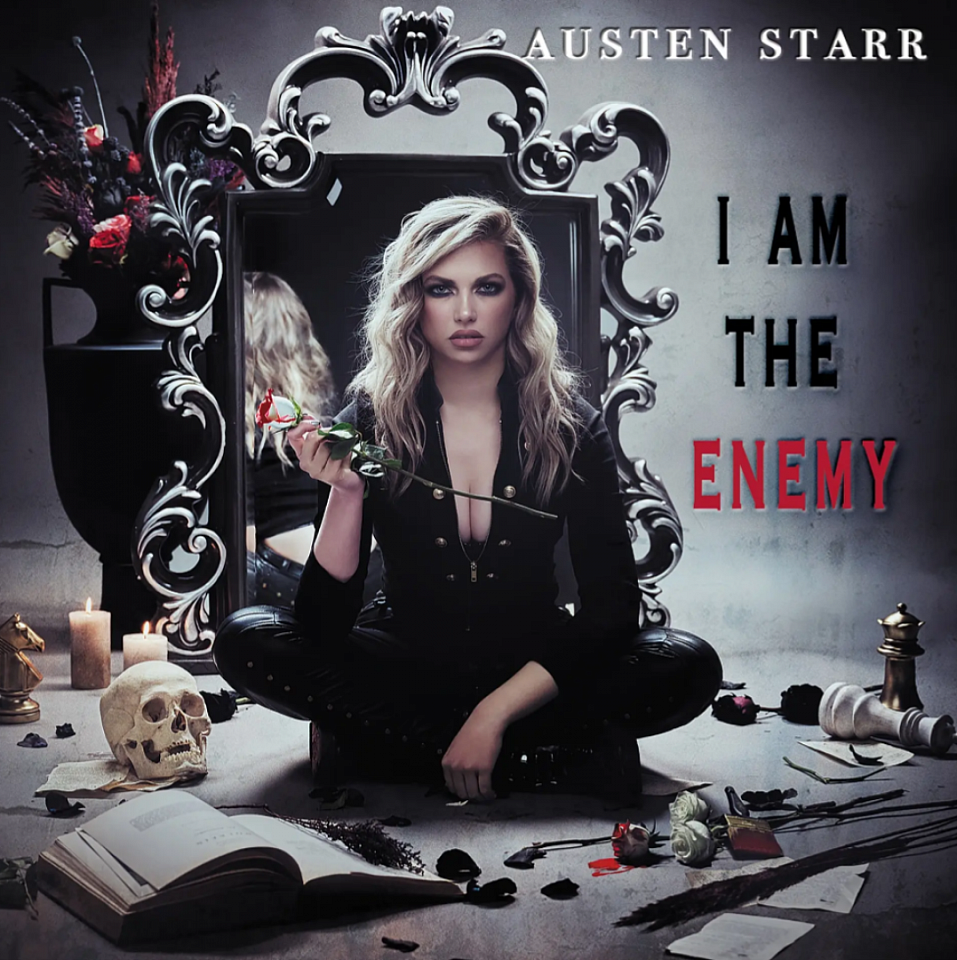
Austen Starr - I Am The Enemy
Let’s pick up on some of your wider projects, and the first I would like to talk to you about is your collaboration with Austen Starr. She is truly a very gifted artist with a beautiful voice and she has a massive future ahead of her. You co-wrote her debut album I Am The Enemy which is perhaps more in the pop-punk genre, very different to what we are used to seeing from you, but absolutely wonderful. You do of course appear the video for the single of the same name where people perhaps wouldn’t readily recognise you - and I love the fact that you put everybody’s minds at rest by telling your fans you hadn’t cut your hair! How did this collaboration come about and also how did it feel for you to take a very different and much simpler path where the guitar is concerned for this record?
She has a song Medusa which is one of the singles and played it for me and I thought it was really cool. I just thought if she had 11 of these she could probably get herself a record deal. Medusa was recorded pretty well but I thought it could be rocked up a bit as her version was quite a bit more pop. So she gave me music that she’s into as examples of what she would want to fashion an album after. Those songs range anywhere from like Fall Out Boy to My Chemical Romance to The Pretty Reckless and stuff but I’m not necessarily used to sitting down and listening to. But what I did was take the inspiration from listening to those tracks and just started to have a jam, and I did what I talked about doing with From The Fade where a lot of it was a riff–first, and then I got a good chunk of the vocal melodies on the album, not all of them and I’m not responsible for much lyrical content. Austen is great with lyrics so that took care of itself which is perfect for me because that’s not necessarily my first thing. I don’t often sit around like a poet and put pen to paper and just put down my thoughts. That’s not really my wheelhouse. For me it was great fun, it was something different and it’s for a younger generation. I guess as an older guitar player it was kind of fun to vibe with that. I didn’t think I was the right person for the videos and said as much, like I was going to be a distraction and I’m old for the role and that it should be a 30-something-year-old guitarist, but ultimately everybody wanted me to be a part of it. So I hopped in there and entered the videos with the alternative look which was kind of interesting! I actually had a great time with that! It was so much fun kind of reinventing myself for a second. It caused quite an uproar when I posted a single picture from the video shoot! People thought I had cut my hair and I was laughing about how serious everybody was thinking that!
From The Fade is released on 27th February. In the meantime check out the videos to the single The Fall, You Can Give and Lifeline below – highly recommended!
