
Little Angels - On Tour In The UK & Ireland this Autumn!
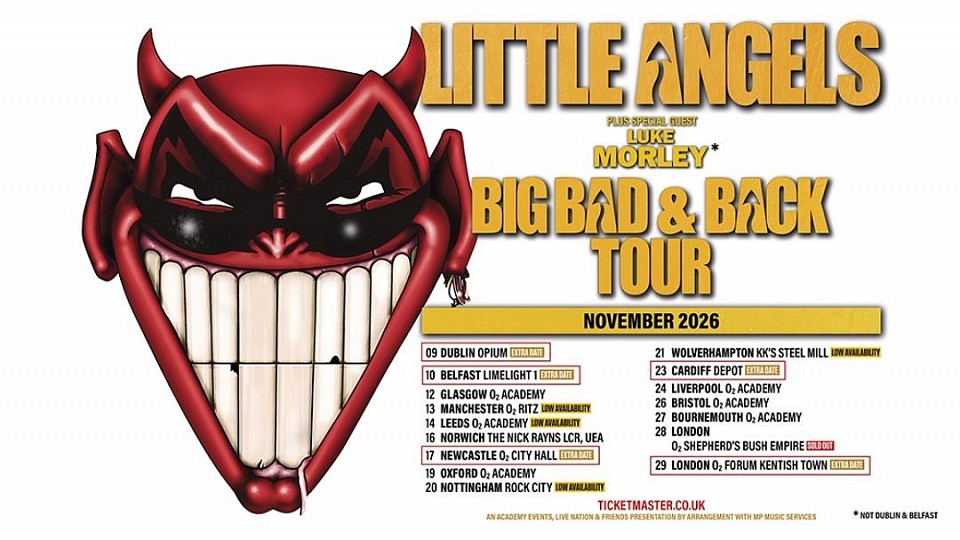
Big, Bad & Back!
Three decades after they left the British rock scene, Little Angels continue to command a remarkable level of loyalty and affection from their fans. Formed in Scarborough in the late 1980s, the band built a reputation for high-energy performances, infectious hooks, and a strong connection with their audience - something that has clearly stood the test of time. We caught up with guitarist Bruce John Dickinson at his home in the Shetland Islands to talk about the band’s legacy, their enduring fanbase, and of course the excitement surrounding the announcement of their UK and Ireland tour in the autumn. This tour promises to be more than just a nostalgic look back. For both the band and their fans, it’s a celebration of a shared history - of packed venues, sing-along choruses, and a catalogue of great songs that still resonate today. We make ourselves comfortable and our conversation begins....
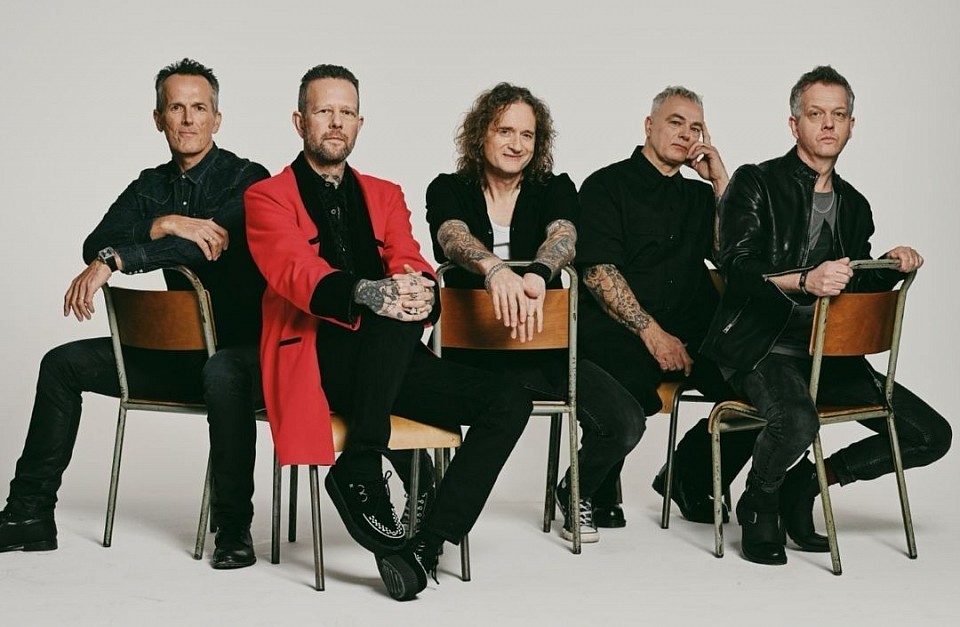
A trip down memory lane...
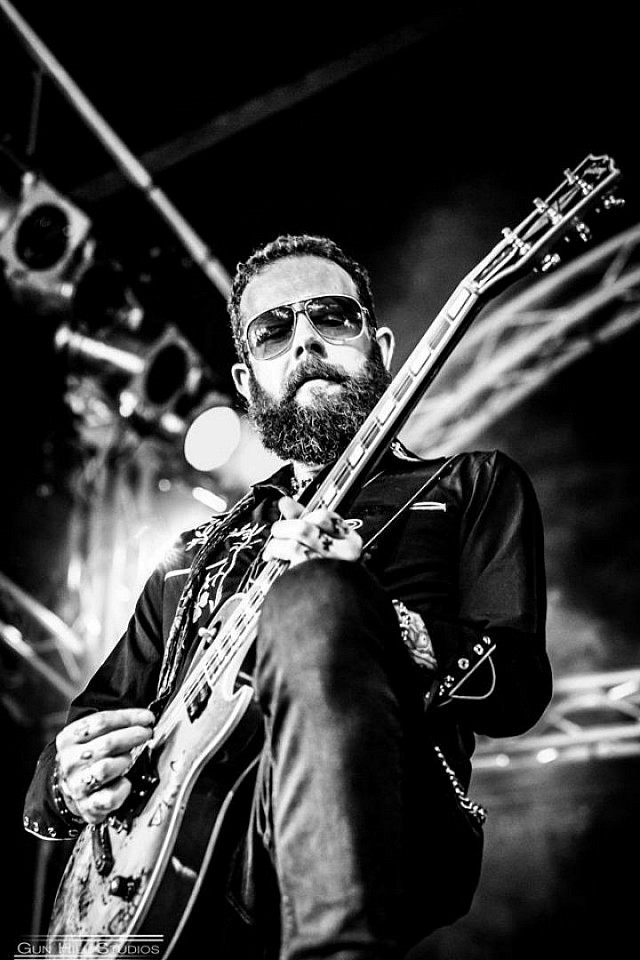
Bruce John Dickinson
I do want to talk about the incredible news that Little Angels are touring later this year, but before we do, I’d like to take a trip down memory lane and I would like to start right at the very beginning. The origins of the band began with Zeus in 1984 before becoming Mr Thrud in 1985 and it would eventually be during the recording of the Too Posh To Mosh mini album in 1987 that you settled on the name Little Angels. In coming together as a band, what was your vision? What was it that you wanted to be and what did you want to achieve at that time?
Yes, Toby (Jepson – vocals, guitar) and Mark (Plunkett, bass) were Mr Thrud and then I met them at sixth form college. Toby was quite a noticeable character because he had proper long hair, something I could only aspire to (laughs!). I remember him being into Dio and stuff like that. I’d been playing a fair bit at this point so I sort of engineered a bit of a jam and it went well. In terms of our vision, we were so young and we just thought that we were amazing! So there never seemed to be any barrier to our ambitions. It never occurred to any of us that we weren’t amazing! (Laughs!) I think that was a real strength that we didn’t know – we were naive enough to have very big ambitions. The other thing about us that was quite unusual was that we were very comfortable with commercial records. For example, Rumours and we all loved Yellow Brick Road by Elton John. We weren’t just listening to AC/DC even though we loved them as well. We liked Metallica as well and that was kicking off when we were at sixth form. It just sounded incredibly radical at the time and we knew it was going to be a very new force in music but we also knew that wasn’t us. We were comfortable of this idea of playing in stadiums even when we were kids and it didn’t occur to us that we couldn’t do it. Big records at the time were stuff like Reckless by Bryan Adams, and that’s an important record for us. And then of course the Bon Jovi thing happened a bit later which opened all the doors for us.
Little Angels always put their fans first. You had an incredible fan club, the band always met fans for free after the shows, you even told fans that you were going to split up and then went on tour. I know your fans appreciated all this. You were accessible as a band and fans often felt it was their friends up there on stage, and that support was incredible to witness. You were doing things specifically for your fans that other bands weren’t. What sort of conversations did the band have around the relationship you wanted to have with your fans?
None! I think it just seemed like we didn’t take it for granted that people came to the shows. I don’t remember any discussion about it, it was just assumed by all of us that we do that stuff. It was good fun anyway, and you learn a lot when you chat to people about what songs they like and what they don’t like, specific parts of the set and also the other things that they are listening to. The other thing is that we were never super cool. It’s like the name Little Angels, it’s not like a heavy thing like an Iron Butterfly or a Def Leppard or a Led Zeppelin. It’s light. That, combined with our youth, would become a little bit of a millstone for a while but I think it allowed us to have our own niche. It meant we would get played on Radio One but we never played Donington, though we played Milton Keynes Bowl and stuff like that. So I think we represented a certain type of person. I mean, all the songs are about getting out of a small town, and I think there were a lot of people around the country who were a similar age to us who felt the same. They wanted to get out of the comprehensive school, they wanted to get out of their environment or they didn’t fit in with all the cool kids. So we spoke for those guys, and when we finished a gig it seemed really natural just to go and chat and hang a bit, you know? There was no strategy to it. It just felt like the obvious thing to do really. We also had so much energy! We were young and daft and we’d be sat up till three in the morning. It would be no bother having to be up early again the next day. We’d be slightly grumpy but a Little Chef would put everyone right! And we did that every night for years and years and years, and I think that’s why people are still here.
Throughout the 80s and 90s, Little Angels released 4 studio albums, a compilation album and 17 singles and every release wasn’t just a release, it was an EVENT! I specifically remember the promo campaign ahead of the release of Young Gods and how the album was originally going to be called Spitfire but you needed to change the name because of what was happening in the Gulf. There was just something really special about the anticipation we all got to experience ahead of an album release. But what was it like for you as a member of the band? How exciting was it for you to see the music that you had written and recorded to be put out there with such an incredible fanfare of excitement?
There’s a lot of highs and lows to it. If you are on major level the stakes are very high. On the first album, we were really in trouble because we released it and there wasn’t a hit on it, and you could see the head scratching starting. You soon get shuffled off. You sign an eight album deal but there’s always an option on the label side to just drop you. So we were in trouble and had a couple of things save us. We re-recorded Radical Your Lover which we’d written with Dan Reed, we remixed She’s A Little Angel and we had the Marillion tour. Those things gave us our first hit and without them we wouldn’t be talking today. The key moment that I really remember was that first top 40 hit. We were off to a gig in Scotland somewhere and we were on a country back road and we were listening to the top 40 and we hadn’t had a tipoff. In the mid week we were hovering around the 40 level so we knew we were in with a shot and we had to listen to it live on the Sunday night run down. Then Motley Crue came in at 37 So we just assumed we hadn’t made it because the idea that we would sell more records than Mötley Crüe just seemed ridiculous! But sure enough, we were 36! I remember that we did this emergency stop down this lane and we all just went nuts running around this field whooping and shouting! We just needed an outlet for it because it was, as I say, high stakes and it was one of those moments you never forget. And then of course with our number one album Jam, it was a similar thing. The other side of it is, when you are on a major label and have a number one album, then what? What do you do next? That’s one of the problems of the music industry. I remember when I called the band Kula Shaker, when they had a number 2 single with Hush, to say congratulations and it was like a morgue because they thought it was going to be number 1. You can’t win! (Laughs!) What you’ve got to do is just enjoy the ups and downs of the rollercoaster and not celebrate too hard when you have a hit and not cry too much when you miss the top 40 or whatever. A rock band is a sort of lifestyle, long-term thing, much like life itself.
For me, and only time would allow us to sort of reflect on it in this way, it was a golden age of music. Of course, things have changed significantly in the music industry over the last generation. Back in the mid 90s, music wasn’t as accessible as it is now. People can now listen to whatever they want whenever they want, but back then most fans would save their money and fully invest in a band. I think this created a huge sense of loyalty – not just for Little Angels but for so many bands and artists – but thinking specifically about Little Angels who had an army of fans following your journey, what we saw from a fans perspective was chart success, a number 1 album with Jam and the band playing the biggest stages as your toured with the likes of Bon Jovi, ZZ Top, Van Halen and Bryan Adams. It seemed like everything was going wonderfully. What was the reality?
We were skint was one reality! At the height I think I remember being on 80 quid a week and scratching around in Wood Green in London to sort of make that work. I think by the end we probably had a couple of hundred quid a week (laughs!) But we always had the thing where for example we’d be recording at Great Linford Manor where we did Young Gods and there would be a French chef asking if we wanted fillet steak or a lobster, but then we’d have pennies in our pockets. All of it was going on the tab. I remember when I met Mick Ronson in a studio called Bearsville, and Mick Robinson is a hero of mine. He was dying of liver cancer at the time - he was certainly very ill but he was in a well period, and he came into Bearsville and asked if we fancied coming and playing poker with him. Well we had two problems: we didn’t know how to play poker and I literally didn’t have five quid! (Laughs!) “No thank you, Mr Ronson…!”. There were so many times when people would see you on Top Of The Pops and just assume you were rich. We paid our rent and we were fine – it was a lot easier to be in our position than to be a musician that didn’t have a major-label record deal. When we came out of the band I think most of us managed to buy a little tiny house of some kind with a mortgage. That’s where we got to with it. But what we did come out with was all the memories which were worth a lot more than any financial thing. I didn’t mind being skint and also it’s character building. We might have been insufferable little oiks if we’d had a load of dough because it can go to your head if you are a young person with a lot of success. I think we managed to stay pretty grounded for the most part, but we had our moments as well! Our relationship with journalists is a good example. I used to get really ‘aggie’ with Dave Ling if he gave us a bad review – stuff like that. When I look back on that it is a bit embarrassing! Me and Dave Ling are mates now so it’s quite funny how things turn out.
How frustrating was it for you as a band to be outwardly presented as having so much success yet you weren’t seeing the fruits of your incredibly hard work?
I don’t think we were that frustrated but we did feel like we should be selling more records. Maybe if we wanted to live like Bon Jovi with a jet! But England is a very small island so it’s not the same level of success as it would be in America. You’re trying to export that success to other countries which is expensive. So we were quite philosophical about it but we were having a whale of a time! Like the Van Halen tour, that was a few weeks around Europe and it was something of a fairytale, you know, hanging with Eddie every day. The silliness and the daftness and the sheer enjoyment of it - on stage and off stage. The things that you remember are the silly little incidents that happened in the tour bus or that you nearly missed the gig because you were late (we nearly missed the first Van Halen show!). It’s things like that you remember, and things like playing Alright Now with Eddie at Wembley arena with fireworks going off behind me. You don’t forget things like that! It was like going to an amazing school of rock ‘n’ roll. That first time with Cinderella we learned a huge amount about how to put a set together and how to get a guitar sound that sounded great through a PA. Toby would be getting vocal tips from Axl Rose who was great. Every band that we went with will learnt something from, and you’d go home a little bit humble, especially with people like Jon Bon Jovi who can put that set together and that level of show together. You go home and have a load of stuff that you’d want to work on and get better. And of course all that kind of went out the window with the post-grunge thing because it became very uncool to try hard in a gig. I remember seeing Soundgarden and it was very understated – really cool but a different thing because it didn’t have that circus element.
Tell me about the moment the band family decided it was time to bring Little Angels to a close? Do you remember that specific moment? I can imagine there being so many emotions in the room.
Yeah, I do. I remember when I realised it was running its course. There were a few storm clouds gathering. It was so fundamental what Kurt Cobain and Nirvana did with Nevermind. People forget how fundamentally that changed people’s tastes in music, the music industry in general and fashion. It’s became very hard to do a guitar solo, so the whole post Eddie Van Halen kind of thing that I grew up with, playing a lot of notes, I evolved my style to be a bit more bluesy for the third album because that’s the way I was going anyway, but it was also because you couldn’t do a shred type guitar solo on a record. People would laugh at it for a start! So fashion has really changed and the other thing was we were a bit late to the party in other countries. So given that the way fashion had changed it was going to be a hard push to really keep pushing away in other countries other than the UK. I think we could’ve got through all that but the main issue was that we were all bonded initially by this idea of getting out of a small town and we were all mates. By the third album, after the aftermath of that, we’d become a bit estranged because there wasn’t anything holding us together. We got out of the small town and we’d grown up. Jim had got married, I think Toby was getting married and people were becoming adults. There wasn’t kind of a lyrical angle where we all became our own people and there wasn’t those essential themes. I didn’t want to write any guitar parts until I knew what the lyrics are because otherwise it’s just a guitar part, it’s not music. So I think we all needed that ‘stand or fall’ and that flag for us to stand behind to signify where we were all going, but we couldn’t get on the same page. That record you talked about that you generously described as the fourth studio album, it’s a mish-mash of bits, a lot of it recorded badly. It’s busy and it’s reflective of the fact that we didn’t really have the direction that we were looking for in a post-grunge world. We got a song called Ten Miles High and I really don’t like it because it’s really weak, it’s a poppy thing with no substance to it, and you see this in bands when they start to scrabble around. The chemistry’s just gone and you can’t work out why. I think that’s why we called it really. The weird thing is that all those reasons that bonded us back in the early days are back again because we are re-visiting that stuff at a much later stage in life and it feels like the sentiment really resonates still.
When the band split in 1996, as the last songs of the set were drawing to a close, what sort of thoughts were going through your mind?
Well it was a big party night that night. I’ve got a bit of a scorched earth policy in my life which is not healthy. I went straight into a band called B.L.O.W., then I went into music education full on, and by a few years in, I didn’t have a single guitar. I didn’t play for about 12 years. I didn’t have a record, I didn’t have the photographs and I had to buy all the records off eBay! (Laughs!) And that’s just me. I’d got rid of that black Les Paul (points to the Eat My Dust guitar – Ed). A band is a hard thing to lose so if you allow yourself to mourn – and I know a lot of people who do that, especially in sport when their career gets caught short early – you can either let it beat you up or you can crack on with the next thing. So I just moved ahead and didn’t think about it too much. So that’s how I dealt with it.
I had the incredibly good fortune to see Little Angels when you regrouped for a tour in 2012. Friendships had been rekindled following you all meeting up at Michael Lee’s funeral. It’s crazy to think that it’s already been nearly 14 years since that tour. How did the decision come about to tour again in 2026? Why is now the right time for Little Angels to get back on stage?
It’s a very interesting question that! In 2014 we were still dancing around each other a little bit because we’d been a bit estranged for a while, all of us, but particularly for some reason me and Toby - it’s that ‘guitarist and singer’ thing. We weren’t really narky with each other, there was just no reason to be in touch. It certainly wasn’t easy for Toby to pick up the phone to me or vice versa but we got over all of that because of Mike passing away and it made us grow up a bit really, particularly me I think. But that tour was a bit careful and it’s a bit funny doing a gig after you’ve not done one for 20 years. So it was a greatest hits kind of package and we didn’t try and do anything for the long term because we were still bringing our own kids up and all that stuff, you know?. It felt more of a ‘once more around the block for old times sake‘. However, to answer your question, now feels really different because it feels like everyone’s at a different stage in our lives and there’s even more of a feeling of the finite nature of life and ‘if not now, when?’. We all just wanted to do it, and because there’s no need to please any label or anything we can do exactly what we want musically. Me, Jimmy and Toby talk about music a lot. Toby‘s harmonies are very interesting because it’s not the usual chord sequences you’d get in a rock band, it’s more like something you get on Hunky Dory (David Bowie) so you get lots of little bits of modulation. He doesn’t know what he’s doing theoretically, he just does it by ear. Sometimes I’d say to him “You’ve just gone to a major chord 3 there, that’s cool!” (Laughs!) When we played Download, probably the only time you’d hear a major chord would be watching the Little Angels set! So we are a bit more of that school and I’m reverting back to the stuff I liked when I was 16, like Vivian Campbell, like Dio’s first records, early Thin Lizzy stuff and playing too many notes. No one’s telling me I can’t do it! (Laughs!) My vibrato is bigger and wider and nobody is telling me to tone it down! I think it just feels like it did when we were kids. I think that’s the difference in 2026. No one’s got a really good answer to that question – it just feels right.
Following the tour announcement, the outpouring of love for the band has been incredible to see. You are playing gorgeous and large venues. It’s so rare that a band can step back into venues of this size after being away so long. You’ve even added an extra night in London and additional shows in Newcastle, Cardiff, Belfast and Dublin - and it already looks like the tour is going to sell out. All this just shows such wonderful love and loyalty to the band. How does all this love and loyalty mate you feel?
Well, it’s unexpected and incredibly welcome and appreciated! Not one comment or single thread online has been taken for granted. It’s just very humbling and I don’t quite understand it but sometimes it’s good not to over analyse things and just go ‘Well that’s amazing!’ and ‘thank you for that everybody’!
And finally, what can fans expect from a Little Angels show in 2026?
Zero concession to the way people do it these days! So it’ll be a proper old school rock ‘n’ roll show! We’ll have to find a sound man who can cope with doing it like we used to. We don’t use ‘in-ears’ and there’s no silly gimmicks. So it’s a classic rock ‘n’ roll show but we will be stretching it musically a little bit more than we did on the last tour and there will be some surprise tunes in there. We are shaking it up a little bit!
As our conversation draws to a close, we reflect on how the autumn tour feels less like a reunion and more like a celebration of a legacy that continues to inspire. This is a live experience not to be missed and it’s with the highest of recommendations that we invite you to grab a ticket. In the meantime, enjoy the video to Boneyard below.
